Trees can enhance a garden by providing shade, privacy and natural beauty. However, as they grow, their branches may begin to extend towards roofs, walls, windows and other parts of a building. If left unmanaged, this growth can create maintenance concerns, restrict access to gutters and increase the risk of damage when branches rub against surfaces or break during strong winds.
For homeowners in Cowplain, Hampshire, managing branches that grow too close to buildings is an important part of responsible tree care. Professional tree cutting can help maintain suitable clearance while preserving the tree’s health, natural shape and long-term stability.
Why Branches Growing Near Buildings Need Attention
Branches do not always cause damage simply because they are close to a property. However, ongoing contact with buildings and uncontrolled growth can create several practical problems that are worth addressing.
1. Branches Rubbing Against Roofs and Walls
Branches that repeatedly scrape against roof tiles, gutters, cladding or exterior walls can wear away surfaces over time. Movement during windy weather may increase friction, while contact with roof coverings can disturb vulnerable components.
Where branches are already touching a building, a tree surgeon can assess whether selective pruning would create sufficient clearance. The aim is to remove or shorten the appropriate branches without unnecessarily cutting back the entire canopy.
2. Blocked Gutters and Restricted Roof Access
Overhanging branches can contribute leaves, twigs and other debris to gutters and roof drainage systems. This may increase the frequency of cleaning and make it harder to inspect parts of the roof.
Carefully planned tree cutting can reduce problematic overhang and improve access for routine building maintenance. However, pruning should be based on the tree’s structure and growth pattern rather than removing large sections simply to create an excessive gap.
3. Increased Risk from Damaged or Weak Branches
Dead, cracked or weakened branches near a building deserve particular attention. If they break, they may fall onto roofs, conservatories, sheds or areas regularly used by people.
Signs such as hanging branches, visible cracks at branch unions or substantial deadwood should be assessed by a professional. If a branch appears unstable, keep clear of the area and arrange prompt assistance rather than attempting to cut it yourself.
4. Reduced Light and Airflow
A dense canopy close to a building can reduce natural light entering windows and limit airflow around parts of the property. In some gardens, selective pruning may help improve light without significantly changing the tree’s overall size.
The appropriate approach depends on the species, canopy structure and amount of growth that needs to be managed. Excessive cutting can weaken a tree or encourage poorly attached regrowth, so maintaining a balanced crown is important.
How to Manage Tree Branches Growing Too Close to Buildings
Identify the Branches Causing the Problem
Start by observing the tree from a safe position. Look for branches touching the building, overhanging vulnerable roof sections or obstructing gutters and windows.
Consider whether the issue is limited to a few branches or whether the tree has grown beyond the available space more generally. This distinction can help a tree surgeon determine whether selective pruning, crown reduction or another form of tree surgery is most suitable.
Choose the Right Tree Cutting Method
Different pruning techniques serve different purposes. Selective branch removal can address specific areas of unwanted growth, while crown reduction can decrease the overall height or spread of a tree where appropriate.
Crown thinning may reduce canopy density, but it is not necessarily the best solution when the main concern is branches touching a building. A professional assessment helps ensure the work targets the actual problem while preserving the tree’s natural form.
Avoid Cutting Too Much at Once
Removing too much of a tree’s canopy can cause stress, affect its appearance and encourage vigorous regrowth. Large, poorly positioned cuts may also create wounds that are difficult for the tree to compartmentalise effectively.
Pruning should therefore be proportionate to the problem and appropriate for the tree species. A qualified tree surgeon can identify which branches can be removed or shortened without compromising the tree’s structure.
Consider Future Growth
A branch that is safely clear of a building after pruning may gradually grow towards it again. When planning tree maintenance, it is useful to consider the tree’s expected growth and the space available around the property.
The aim is to establish suitable clearance without repeatedly cutting the tree back too severely. Regular assessments can help identify developing issues before branches become difficult to manage.
Why Professional Tree Surgery Is Important
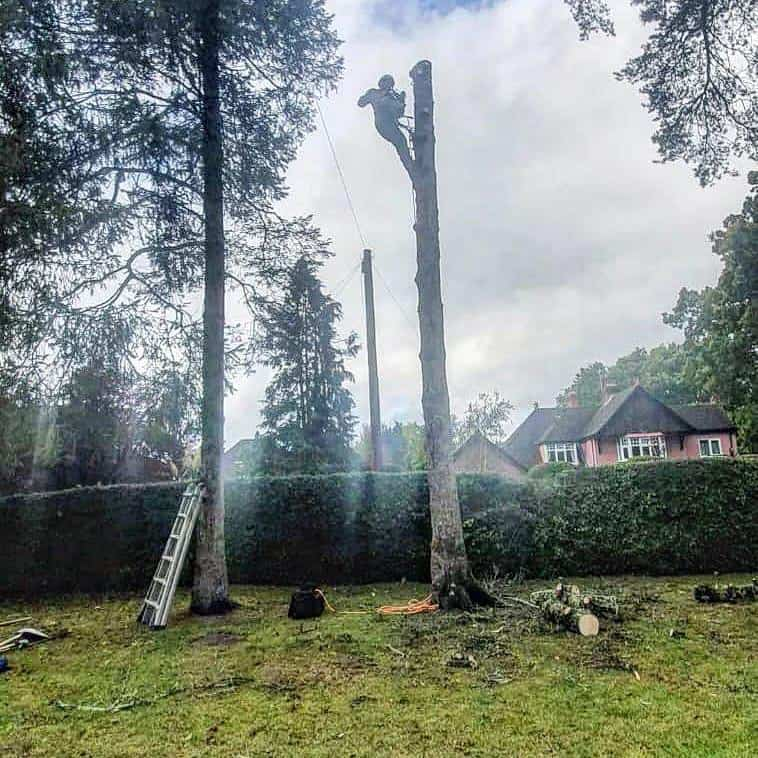
Working near buildings can make tree cutting more complicated than ordinary garden pruning. Branches may be heavy, access may be restricted, and careless cuts can damage the tree or nearby structures.
A professional tree surgeon can assess the canopy, identify problematic growth and plan the work around the building’s position. They can also advise whether selective pruning is sufficient or whether crown reduction would provide a more appropriate long-term solution.
For homeowners in Cowplain, Hampshire, professional tree surgery helps ensure that branches are managed with consideration for both the property and the tree’s health.
Tree Cutting Services in Cowplain, Hampshire
Branches growing too close to a building should be assessed before they cause damage or become difficult to manage. Whether the concern involves roof contact, blocked gutters, reduced light or potentially unstable limbs, the correct pruning method depends on the tree’s condition and surroundings.
LM Tree Surgery Cowplain can help assess trees growing near buildings and recommend suitable tree surgery to manage overhanging or unwanted branches. If you have concerns about a tree close to your property, contact LM Tree Surgery Cowplain to discuss your requirements and arrange a professional assessment in Cowplain, Hampshire.
Conclusion
Managing branches that grow too close to buildings can help reduce contact with roofing materials, limit debris around gutters and address potentially hazardous limbs. The key is to use an appropriate pruning method that provides suitable clearance without unnecessarily damaging the tree.
If branches are encroaching on your home or another building, contact LM Tree Surgery Cowplain for professional advice and tree cutting services in Cowplain, Hampshire.
Call us on: 023 8235 6096
Click here to find out more about LM Tree Surgery Cowplain
Click here to complete our contact form and see how we can help with your tree needs.